The First Preferment: Mix your active rye sourdough starter with 70 g of water and 70 g of rye bread flour. Mix well, cover, and let it ferment at room temperature for 10 to 12 hours. You will end up with about 150 g of a pleasantly sour-smelling, active starter.
The Second Preferment: First, dissolve the flat teaspoon of cane molasses into the 150 g of water. Combine this liquid with your ripe starter from step one, and add 150 g of rye bread flour. Mix thoroughly, cover, and let it ferment until it increases in volume and regains a slightly sour aroma. This usually takes 2 to 4 hours.
Mixing the Main Dough: Add the 320 g of water, 450 g of rye bread flour, salt, and caraway seeds to your active preferment. These doughs should be mixed just until combined.
Panning and Proofing: Generously grease a bread pan (just under 30 cm long) with butter or lard. Transfer your mixed dough into the pan, smoothing the top with your wet glove. Cover tightly with oiled cling film and let it proof. Depending on the room temperature, this takes 1 to 3 hours. The loaf is ready when the volume has visibly increased and tiny bubbles appear on the surface.
Cold-Oven Baking: Brush the surface of the risen loaf gently with water and sprinkle with seeds if desired. Place the pan onto a baking sheet and slide it directly into a cold oven. Turn the oven on to 210–220 °C. Bake for 40 minutes (starting from the moment the oven reaches its target temperature).
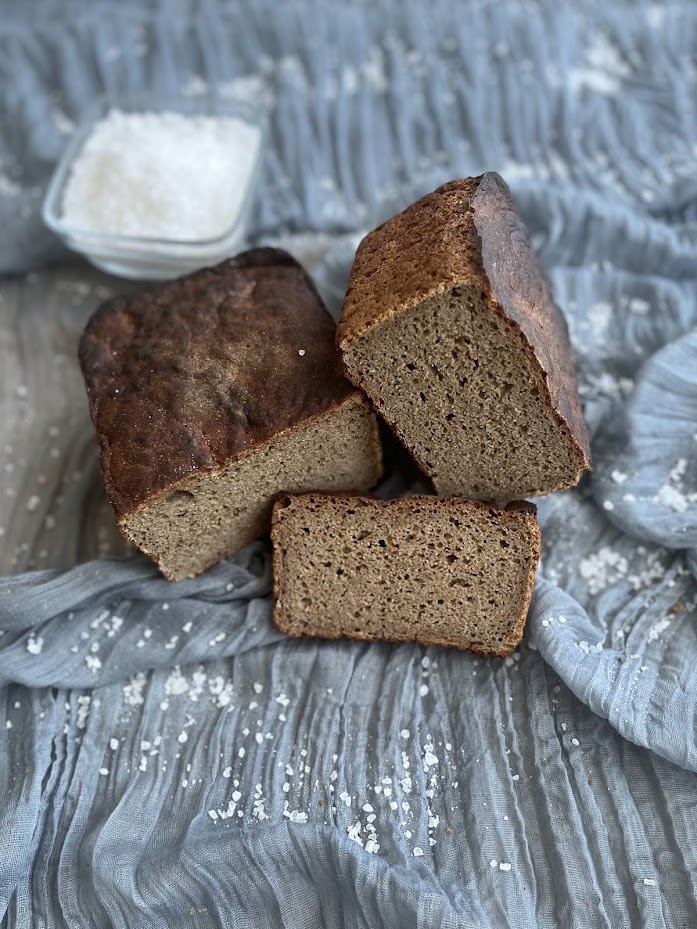
The Flip and Final Bake: After 40 minutes, carefully flip the bread out of the pan directly onto the hot baking sheet. Bake for another 20 minutes to develop a robust crust. Because rye dough is dense and sticky, a simple skewer test is not enough. The internal temperature in the absolute center of the crumb must reach at least 97 °C (ideally between 96 and 98 °C).
The Ultimate Test of Patience: Transfer the bread to a wire cooling rack. Step away and let it rest for at least 12 hours before making your first slice.