
Ingredients
Method
- Prepare the Preferment & Toasting: Dissolve fresh yeast in lukewarm water, then stir in the fine wheat flour until smooth. Cover and let ferment for 30–45 minutes until bubbly and doubled in volume. Meanwhile, dry-toast 50 g oat flakes and 30 g pumpkin seeds in a dry skillet until fragrant and golden. Allow to cool completely.
- Emulsify the Liquid Fat Phase: Gently melt the butter and combine it with the oil and remaining 210 ml water. This thermal buffer prevents hot fat from damaging active yeast in the preferment while distributing fats evenly throughout the dough hydration.
- Incorporate into Preferment: Once the omládek is fully active, gently stir in the liquid butter-oil-water mixture.
- Dough Mixing: Add the remaining dry ingredients — wheat flour, rye flour, salt, and the cooled toasted seeds/oats. Knead on low-to-medium speed for 5 to 7 minutes maximum to protect the rye pentosan structure. Cover and let bulk-ferment at room temperature until noticeably risen.
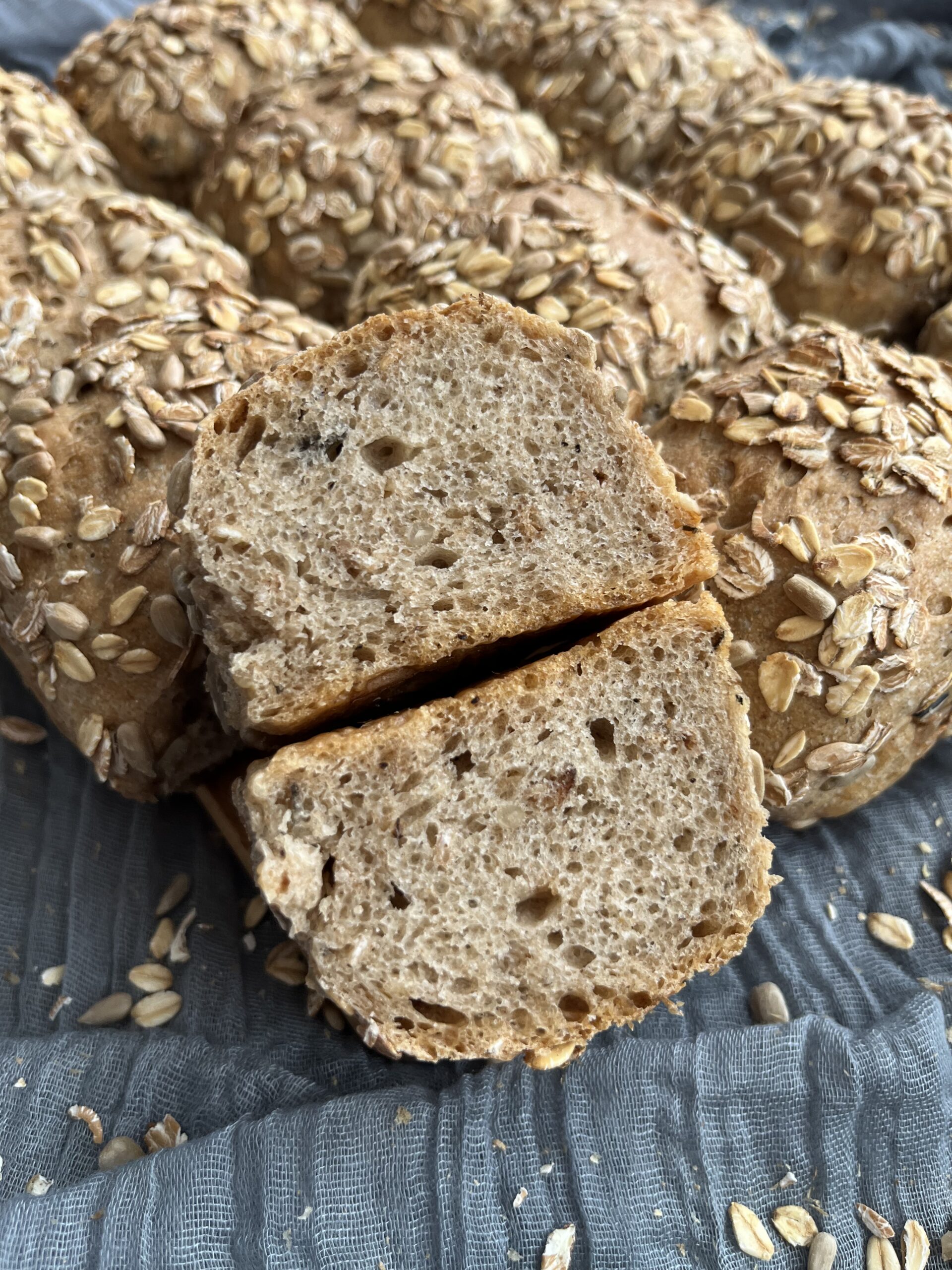
- Dividing & The Wet Towel Coating Trick: Divide the dough into 12 equal portions (approx. 83 g each) and shape into tight, smooth rolls. Prepare a damp, wrung-out kitchen towel. Roll the top surface of each dough ball onto the wet towel to apply a micro-layer of moisture, then immediately press into the bowl of untoasted oat flakes and sunflower seeds.
- Pan Assembly & Final Proof: Arrange the coated rolls side-by-side (touching lightly) in a 20 x 30 cm baking pan. Placing them close together prevents the sides from drying out and creates soft, pillowy pull-apart edges. Cover loosely and proof until puffy.
- Steamed Baking: Preheat your oven to 220 °C (425 °F) with a steam pan at the bottom. Bake with steam for 10 minutes to maximize oven spring and crust shine. Remove the steam pan, lower the temperature to 200 °C (390 °F), and bake for another 20 minutes until deeply golden brown.
Notes
Baking Science & Pro Tips:
The Maillard Reaction: Why toast the seeds and oat flakes first? Never skip this step! Dry-toasting on a hot pan triggers the Maillard reaction — a chemical reaction between amino acids and reducing sugars. This delivers an intense, roasted nuttiness and fortifies the structural integrity of the oats and seeds so they don't turn mushy inside the wet dough.
Rye Pentosans: This recipe incorporates 200 g of rye flour. Unlike wheat flour, which relies on gluten network development through extensive kneading, rye relies on pentosans to absorb water and build dough structure. Kneading must be kept brief (5 to 7 minutes max) to avoid breaking down these delicate pentosan chains, which would result in dense, flat rolls.
Applied Physics - The Wet Towel Trick: Brushing with egg wash isn't necessary when you can leverage surface chemistry! Gently rolling each shaped dough ball across a clean, damp cloth deposits a microscopic layer of moisture. This instantly activates surface starches in the dough, causing them to gelatinize into a powerful natural adhesive, keeping your seeds permanently locked in place.