
Ingredients
Method
- The Initial Mix: In a mixing bowl, combine the active starter, light wheat flour, whole wheat flour, and most of the water. Leave out the salt, potatoes, caraway, and a small splash of the reserved water. Knead until a basic gluten network forms.
- Developing the Dough: Add the salt and caraway seeds and continue kneading until the dough is elastic and pulls away from the sides of the bowl. The dough temperature should be around 24–25 °C.
- Adding the Potatoes & Spice: Switch the mixer to the lowest speed. Gently incorporate the finely grated or mashed potatoes. If the dough feels too stiff, gradually add the reserved splash of water based on the dough's consistency.
- Bulk Fermentation: Transfer the dough to a warm spot (ideally around 26 °C). Let it ferment for approximately 3 hours. During this bulk fermentation, perform a series of folds at the 30-minute, 60-minute, and 120-minute marks to build strength in the dough.
- Pre-shaping & Resting: Turn the risen dough out onto a clean surface and gently pull it into a tight, round boule (preshape). Let the dough rest uncovered for 30 minutes.
- Shaping & Proofing Strategy: After the rest, do the final shaping and place the dough into a proofing basket. Let it rise slightly at room temperature (the exact time depends on the strength of your starter), then cover it tightly and place it in the fridge overnight. The cold fermentation will deeply develop the flavor, and the chilled dough will be perfectly firm and easy to handle in the morning.
- The Bake with Steam: The next morning, preheat the oven to 250 °C with a baking stone and steam setup. Turn the cold dough out of the basket, score the loaf, place it in the oven, and bake with heavy steam for the first 15 minutes. To master this critical step, read the complete guide on steam in home baking.
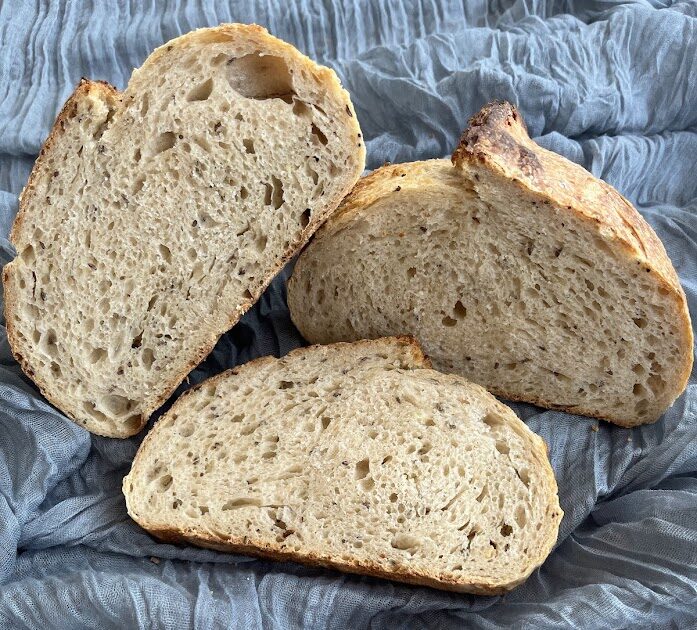
- Finishing the Bake: Release the steam, lower the temperature to 180 °C, and bake for another 20-25 minutes until the crust is deep golden brown and the loaf sounds hollow when tapped. Let it cool completely before slicing! ✨
Notes
The Chemistry of Potato Starch & Moisture Retention:
Why add potatoes to bread dough? It all comes down to the magic of starch gelatinization! Potatoes are packed with complex starches that swell and gelatinize when boiled. These gelled starches hold onto water much more effectively than standard wheat flour. By incorporating mashed potatoes into the dough, the moisture is trapped inside the crumb, keeping the bread incredibly soft and preventing it from drying out for days. The Science of Cold Proofing & Potatoes:
For the best flavor and structural development, I highly recommend letting the shaped loaf proof slightly at room temperature (the exact time depends on the strength of your starter), and then transferring it to the fridge overnight. Cold fermentation slows down yeast activity while allowing enzymes to break down starches into simple sugars, deepening the crust's caramelization and the crumb's flavor profile. As a bonus, cold dough is much firmer and easier to handle and score before baking!