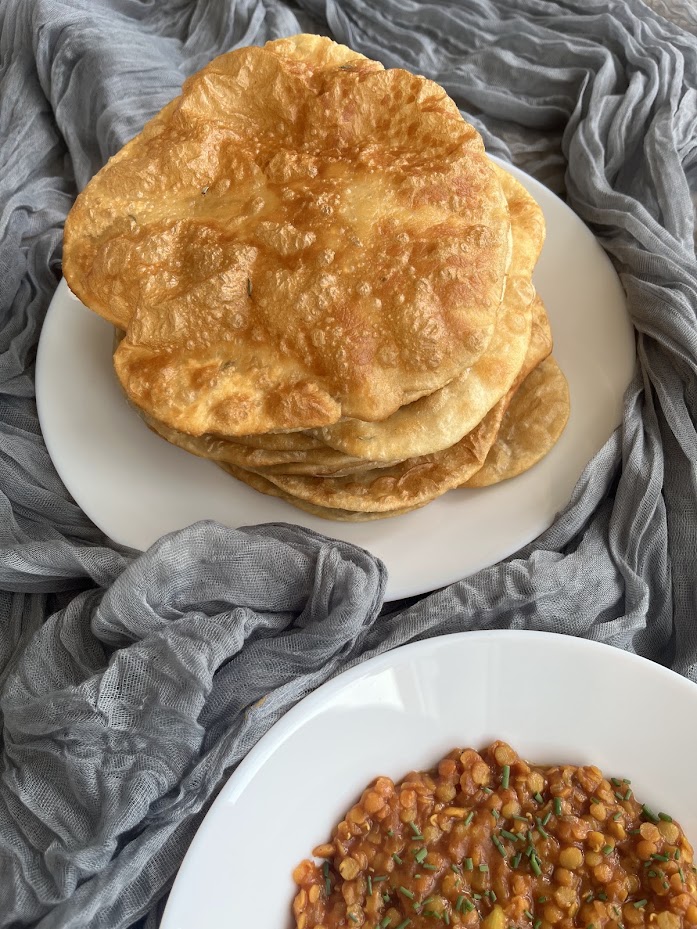

Ingredients
Method
- Preparing the Scalded Dough: In a heatproof mixing bowl, thoroughly mix the plain flour with the fine salt. Pour in the boiling water. Using a wooden spoon or spatula, stir the mixture until it comes together, then hand-knead into a smooth, firm, and uniform dough (or use a food processor).
- Resting the Dough: Cover the bowl with a clean towel or plastic wrap to prevent a skin from forming. Let the dough rest at room temperature for 20 minutes. This resting phase relaxes the gluten structure and allows the flour to fully hydrate, making the dough exceptionally pliable.
- Dividing and Rolling: Turn out the rested dough onto your work surface. Divide it into 6 to 9 equal portions and roll each portion into a smooth round ball. Using a rolling pin, roll each ball out into a thin, even flatbread.
- Heating the Oil: Pour cooking oil into a deep pan or heavy saucepan so that it reaches a depth of at least 2 to 3 cm, allowing the flatbreads to float freely. Heat the oil thoroughly over medium-high heat. Test the heat by dropping a small piece of dough into the oil—it must immediately float to the surface and sizzle vigorously.
- Frying: Carefully lay one flatbread into the hot oil.
- Golden Finish and Draining: Immediately flip the inflated flatbread to fry the second side until golden brown (the entire frying process takes less than one minute). Remove the flatbread using a slotted spoon and place it on a plate lined with paper towels to absorb any excess oil. Serve hot and fresh!
Notes
The Story of Simple Fried Flatbreads:
In a world filled with complex recipes and endless lists of ingredients, true baking magic often lies in absolute simplicity. Sometimes, all we need to create something truly extraordinary is high-quality flour, boiling water, a pinch of salt, and hot oil. These crispy, golden puffed flatbreads are a celebration of back-to-basics artisan baking, focusing on honest ingredients without shortcuts. Baking Science (The Magic of Hot Water and Steam):
By scalding the flour with boiling water, we gelatinize the starches and transform basic pantry staples into an incredibly pliable, tender dough. When introduced to hot oil, trapped steam rapidly expands within the dough layers. This physical reaction causes each flatbread to inflate like a golden balloon in a matter of seconds. Baking Tips for Success:
• Oil Over Flour: Instead of dusting your work surface and rolling pin with flour, lightly grease them with a drop of cooking oil. Excess flour on the surface of the dough burns quickly in hot oil, turning the oil dark and leaving a bitter taste on your flatbreads.
• The Balloon Trick: As soon as the flatbread floats to the surface, take a slotted spoon or spatula and gently press the flatbread downward into the hot oil (as if trying to submerge it). This slight pressure combined with the high heat causes steam to burst inside the dough, inflating the flatbread completely like a balloon within 2 to 3 seconds!