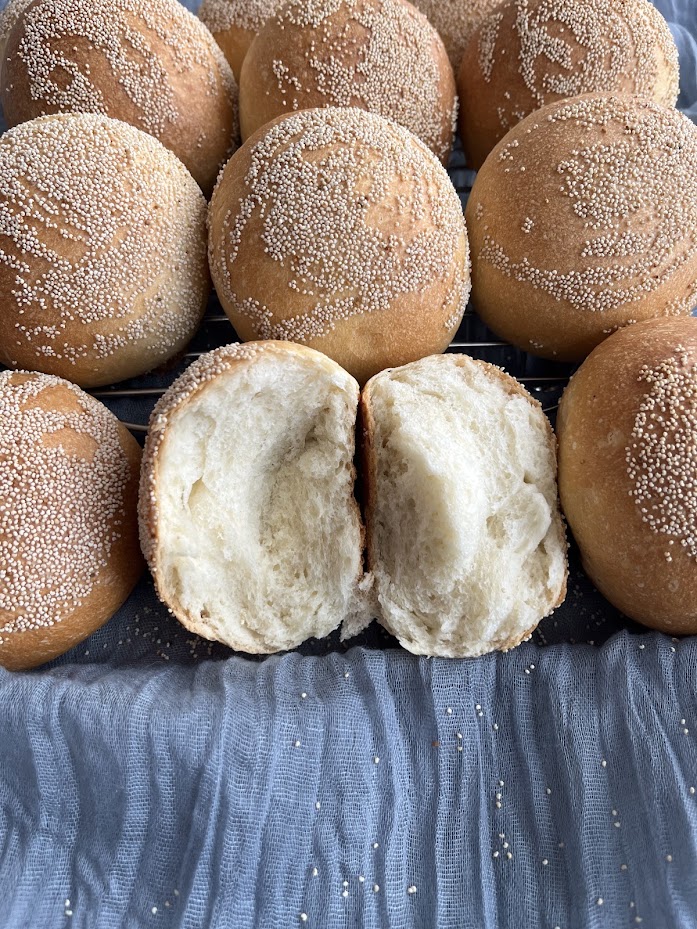

Ingredients
Method
- Prepare the omládek (preferment): In a mixing bowl, first dissolve the fresh yeast in the lukewarm milk, then mix in the flour until smooth. Cover and let it rise in a warm spot for 30 to 45 minutes until doubled in volume with prominent bubbles on the surface.
- Mix the base dough: Add the remaining lukewarm milk, flour, small egg, and sugar to the active preferment. Mix until the ingredients roughly come together into a shaggy mass.
- Incorporate salt and fats: Add the salt and the cold, cubed butter, kneading until the butter is fully worked into the dough. Next, gradually pour in the vegetable oil. Continue kneading patiently until the dough is completely smooth, elastic, and naturally pulls away from the sides of the bowl without adding extra flour.
- First rise: Cover the bowl and let the dough rise at room temperature until doubled in volume (approximately 1 to 1.5 hours).
- Divide and shape: Turn the proofed dough out onto a clean work surface and divide it into 12 equal portions, weighing about 75 g each. Shape each portion into a tight, smooth round ball (bun) by rolling it against the work surface using the palm of your hand.
- Second rise: Place the shaped buns onto a baking sheet lined with parchment paper, cover loosely, and let them proof until noticeably puffy.
- Preheat the oven: Preheat the oven to 200°C (390°F). If using the water-brushing method, prepare the oven for steaming.
- Brush and top: Gently brush the proofed buns with water (or beaten egg for a glossy finish) and sprinkle generously with white or blue poppy seeds. (Note: If using egg wash, skip the oven steam completely!)
- Bake: Place the tray into the oven. Bake at 200°C for the first 5 minutes with steam (skip steam if using egg wash). Then, release any steam, lower the oven temperature to 180°C (355°F), and bake for another 10 minutes until beautifully golden brown.
- Cool: Transfer the baked sweet buns to a wire rack to cool slightly before serving.
Notes
Why Combine 30 g of Cold Butter with 30 g of Liquid Oil?
Fat coats the gluten strands, ensuring a tender bite. Butter provides an irreplaceable rich flavor, but because its saturated fats solidify at room temperature, all-butter breads can feel firmer the next day.
Vegetable oil remains liquid at room temperature, lubricating the starch structure and keeping the crumb ultra-moist for days. Adding the fats only after the initial mix guarantees they do not inhibit gluten formation early on.
Mastering the Crust: Crisp & Matte vs. Rich & Glossy
Creating the perfect sweet bun is all about choosing the preferred crust finish before the tray enters the oven:
• The Traditional Crisp Crust (Water + Steam): Brushing the proofed buns with plain water and baking them with steam for the first 5 minutes keeps the exterior flexible. This allows for a massive oven spring and yields a paper-thin, delicate crust.
• The Bakery-Style Glossy Finish (Egg Wash, No Steam): If a deep mahogany shine is preferred, brush the buns with beaten egg instead of water and skip the oven steam entirely. Steam causes an egg wash to curdle and dulls the shine, whereas a dry oven sets the egg proteins into a mirror-like glaze!