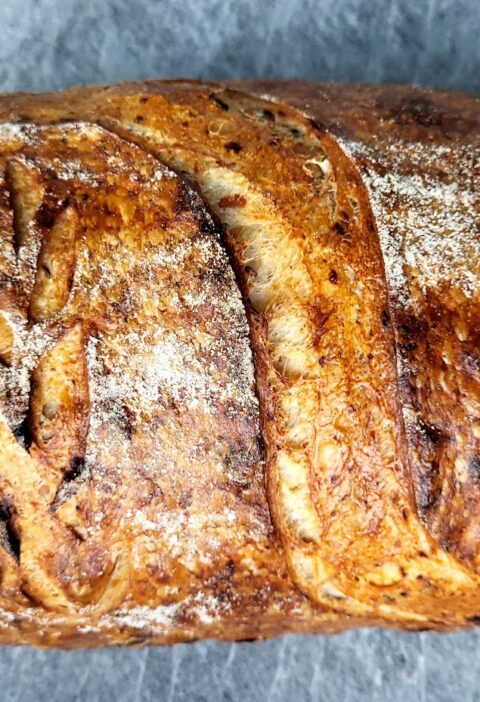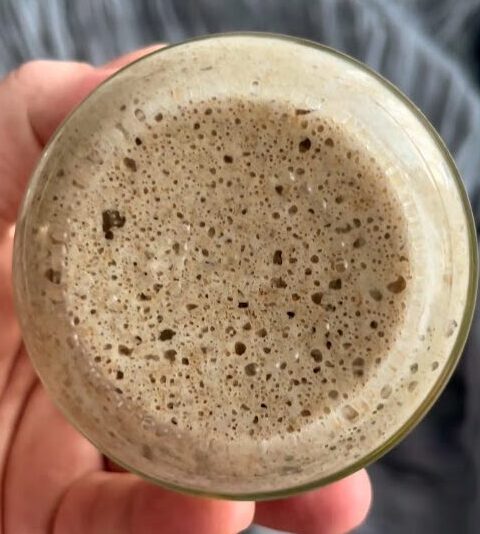
Welcome to a space where honest ingredients meet home-made magic. When I dive into the world of artisan baking, I always emphasize that true craftsmanship cannot be rushed. We often focus on the yeast and the flour, but today, I want to talk about the invisible architecture of your dough: the gluten network. If you want to create a pastry that boasts a magnificent rise and an exquisite crumb, you need to understand why patience will always beat shortcuts.
Baking History Fact: The Evolution of Milled Flour and Patience
Historically, ancient and medieval bakers did not have the luxury of highly refined, chemically standardized white flours available today. Stone-milled flours contained varying particle sizes and unpredictable protein qualities. To make edible, rise-capable bread from these primitive ingredients, bakers relied entirely on lengthy fermentation and patient hand-kneading. They understood a fundamental truth that modern industrial baking often forgets: developing protein structures requires time, not brute force. Rushing the process historically resulted in dense, unpalatable loaves, proving that patience has always been the ultimate baking tool.
Baking Chemistry Fact: How Gluten Builds Strength
When flour meets liquid and mechanical energy (kneading), two key storage proteins in wheat—gliadin and glutenin—hydrate and bond together to form gluten. This creates a continuous, elastic, and extensible protein network.
- Trapping Gases: This microscopic web is what traps the carbon dioxide produced by yeast, allowing your dough to inflate like a balloon and achieve a proud, tall structure.
- The Danger of Impatience: If you rush the process or find your dough too sticky and immediately dump in extra flour, you overload the dough with dry weight. This throws off your hydration ratio, weighs down the protein strands, and creates a dense, heavy bake.
- The Power of Folding: Kneading is not the only way to build structure. By gently stretching and folding the dough during its resting period, you actively align the protein chains and further strengthen the gluten network. This technique works wonders for dough development without the need to aggressively overwork it.
When your dough feels sticky at first, do not panic and do not reach for the flour bag. Keep kneading with gentle persistence; as the protein chains align and build bonds, the dough will naturally absorb the moisture, smooth out, and pull away from the bowl.
Enjoyed this baking deep-dive? Join our Bakeklubb for monthly artisan baking notes and early access to upcoming workshops.