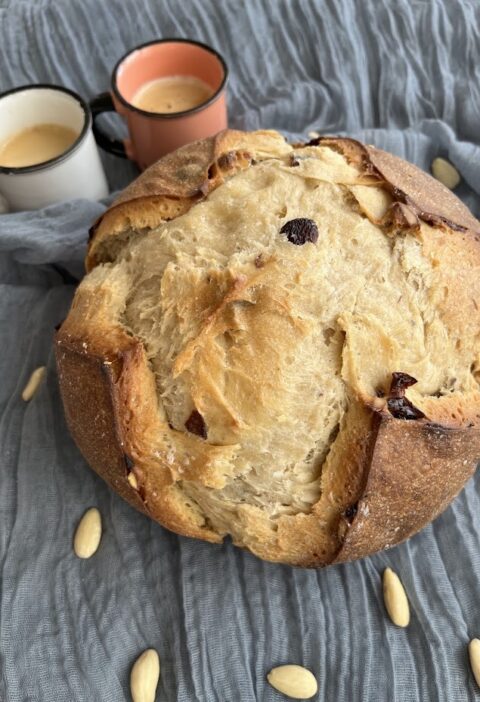
There is nothing quite like the smell of a warm bakery infused with toasted seeds and fragrant spices. 🌿 This spiced sourdough bread takes rustic baking to an entirely new level. It is beautifully scented with a carefully crafted, toasted blend of fenugreek, fennel, anise, and oregano.
To give the crumb an incredibly soft texture and extend its shelf life, the dough is enriched with olive oil. The result is a delicate, perfectly thin crust packed with a roasted mixture of nigella and sesame seeds.
The Science of Blooming and Delayed Fat
Building flavor and structure requires precise timing. Toasting the whole spices before grinding unlocks their fat-soluble essential oils, maximizing their aroma. Furthermore, adding the olive oil only after a dedicated flour-and-water resting phase (autolyse) guarantees a strong gluten network.
Adding fat completely changes the chemistry of the loaf. The lipid molecules physically coat the gluten strands, which creates a softer crumb, a thinner crust, and locks in moisture to slow down staling. Dive deep into The Science of Olive Oil in Dough to master these exact chemical reactions and artisan techniques!
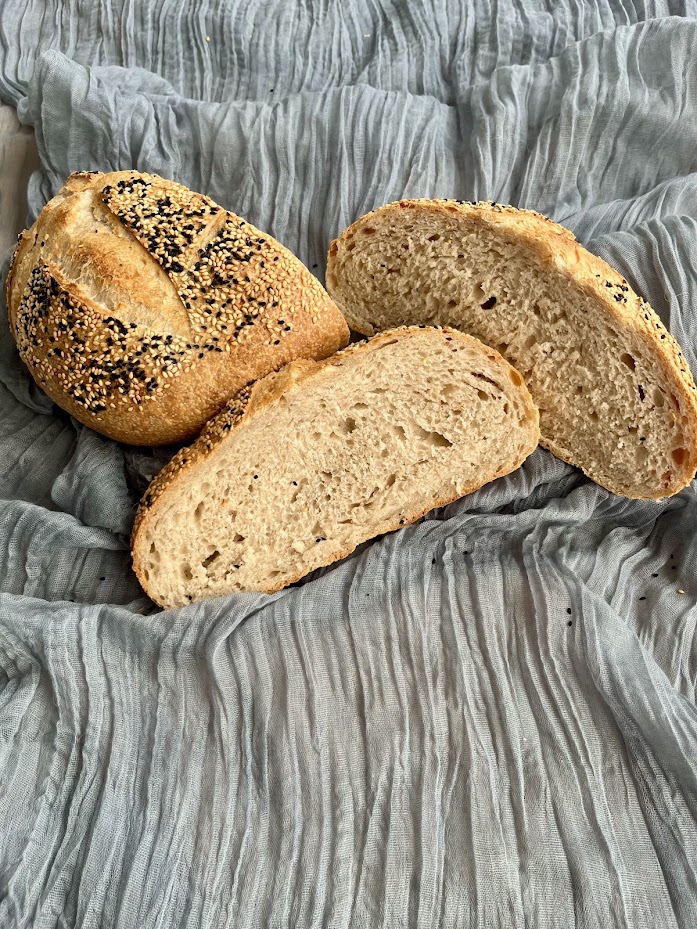

Spiced Sourdough Bread with Olive Oil
Ingredients
Method
- Prepare the levain: Mix the water, all-purpose flour, and active sourdough starter in a jar. Cover and let it ferment until doubled and bubbly.
- Toast the spices: Place the fenugreek, fennel, and anise in a dry pan over medium heat. Toast gently for a few second until highly fragrant. Let the spices cool completely, then grind them into a fine powder.
- Autolyse (The Initial Mix): In a large bowl, mix the 260g of water, all-purpose flour, and rye flour until no dry spots remain. Do not add the salt, olive oil, or spices yet! Let the dough rest for exactly 1 hour.
- Develop the dough: After the 1-hour rest, add the salt, toasted spice mix, oregano, and olive oil. Knead patiently until the oil is completely absorbed and the dough becomes smooth and elastic.
- Bulk fermentation: Let the dough ferment at room temperature. Perform a stretch and fold after 30 minutes, and another one after 90 minutes to build structural strength. Let it continue rising until noticeably puffed.
- Shape and seed: Turn the dough out and shape it into a tight batard or boule. Spread the nigella and sesame seeds evenly on a clean tray. Roll the top of the shaped dough over a damp kitchen towel to moisten the surface, then gently roll it directly into the seeds so they stick.
- Final proof: Place the seeded dough seam-side up into a proofing basket. After 10 minutes of resting in the basket, stitch the seams of the dough together with fingers to maximize surface tension. Let it continue to proof until perfectly puffy and ready for the oven.
- Bake with steam (Phase 1): Preheat the oven to 250°C. Score the dough, load it into the oven, and bake with heavy steam for exactly 10 minutes.
- Finish baking (Phase 2): Release the steam and immediately lower the oven temperature to 220°C. Bake for an additional 15 minutes to ensure the crust cooks completely without burning. Let the bread cool on a wire rack before slicing.
Notes
Enjoyed this baking deep-dive? Join our Bakeklubb for monthly artisan baking notes and early access to upcoming workshops.