Welcome to a space where honest ingredients meet home-made magic. When I dive into the world of yeast dough, I always emphasize that true artisan craftsmanship cannot be rushed. We often focus on the yeast and the flour, but today, I want to talk about an ingredient that can completely transform your dough’s structure and longevity: fat.
If you want to create a pastry that boasts a beautifully airy structure and stays wonderfully soft for days, you need to understand exactly how and when to invite fat into your dough.
Baking Chemistry Fact: Why Cold Fat is Crucial
In our fundamental baking rules, I always state that fat—whether it is butter or lard—must be incorporated cold and cut into cubes. Furthermore, any fat and salt must be added to the dough only after the initial wet and dry ingredients are thoroughly combined. But why do we do this?
It all comes down to baking chemistry. Flour contains proteins that form a strong, elastic gluten network when mixed with liquids. This network is what traps yeast gases and gives your dough its tall, proud structure.
If you pour warm, melted butter into your bowl right at the beginning, the liquid fat acts like a waterproof coating. It aggressively coats the flour proteins, physically blocking them from bonding and forming long gluten strands. The result? A dense, heavy, and structurally weak pastry.
By mixing the dough first, you allow the gluten network to fully develop. When you finally knead in the cold fat, it smears gently between the already-formed gluten layers without destroying them. The cold temperature ensures the fat doesn’t melt prematurely and ruin the structure, giving you a pastry that is incredibly strong, yet melt-in-your-mouth tender.
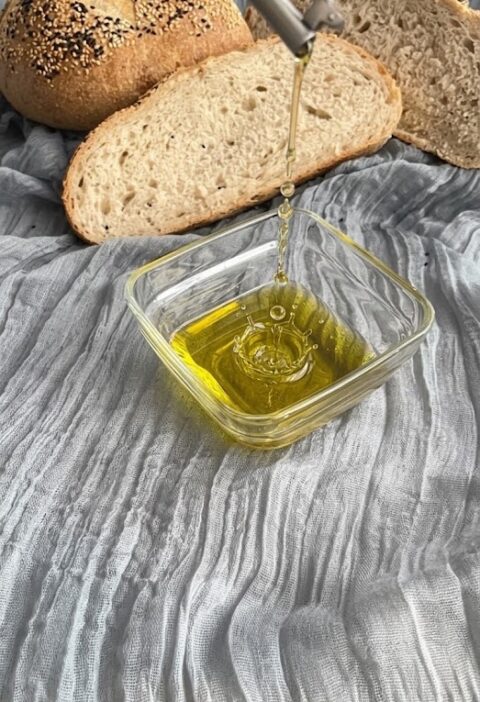
The Magic of the 50/50 Blend: Butter meets Oil
You might have noticed that in some of my recipes, I ask you to use a 50/50 split of butter and oil. You might wonder why we don’t just use 100% butter for the ultimate flavor. Here is why blending them is a game-changer for artisan baking:
- Long-Lasting Softness: Butter is a solid fat at room temperature. When a 100% butter pastry cools down, the fat inside solidifies again, which naturally makes the crumb feel firmer the next day. Oil, on the other hand, remains liquid at room temperature. By replacing half the butter with oil, the crumb retains a deeply moist, supple, and soft texture for days after baking.
- Unmistakable Flavor: While oil provides superior moisture, it lacks personality. Butter provides that rich, authentic, and undeniable artisan flavor that simply cannot be replicated.
By combining the two, you capture the absolute best of both worlds: the structural longevity and moisture of the oil, perfectly balanced with the honest, rich taste of the butter.
A Gentle Reminder for Your Next Bake
When you add your cold, cubed butter and your oil to the dough, it will momentarily look like a slippery disaster. Do not panic, and please, do not immediately add extra flour!
Just keep kneading with patience. The dough will eventually absorb the fat, becoming incredibly smooth, elastic, and naturally pulling away from the sides of your bowl. Embrace the chemistry, trust the process, and enjoy the magic you create
Enjoyed this baking deep-dive? Join our Bakeklubb for monthly artisan baking notes and early access to upcoming workshops.