Welcome back to the digital kitchen! 🍳 Today is all about exploring a technique that fundamentally changes how dough develops, tastes, and behaves: Griddle Baking. While most artisan breads rely on the intense, circulating heat of an oven, many iconic breads and breakfast staples are cooked entirely on a dry, flat pan.
Let’s dive into the fascinating chemistry of direct heat, moisture retention, and the creation of those famous porous crumbs and toasted crusts.
From the Oven to the Pan: A Brief History
Historically, heating a massive stone or brick oven required an immense amount of wood and time. For quick morning bakes or in households without large ovens, a cast-iron griddle suspended over an open fire was the ultimate solution. This efficient method gave birth to flatbreads, crumpets, and legendary pan-baked muffins. Today, griddle baking remains a vital technique that creates textures an oven simply cannot replicate.
Conduction vs. Convection: The Science of Direct Heat
When baking bread in an oven, the dough is cooked primarily through convection (hot air circulating around the loaf) and radiant heat. The entire surface of the dough heats up simultaneously, creating a rounded, even crust.
Griddle baking, however, relies on conduction—the direct transfer of heat from a solid metal surface straight into the dough. This direct contact cooks the dough from the bottom up. By flipping the dough halfway through, it creates two distinct, flat, toasted crusts while sealing the moisture tightly inside the soft crumb.
Why a Dry Pan?
For many traditional pan-baked goods, the griddle must remain completely dry (often lightly dusted with semolina or cornmeal). Introducing oil or butter would fry the dough, sealing the surface too quickly and preventing the gentle expansion of the interior crumb.
The Architecture of a Porous Crumb
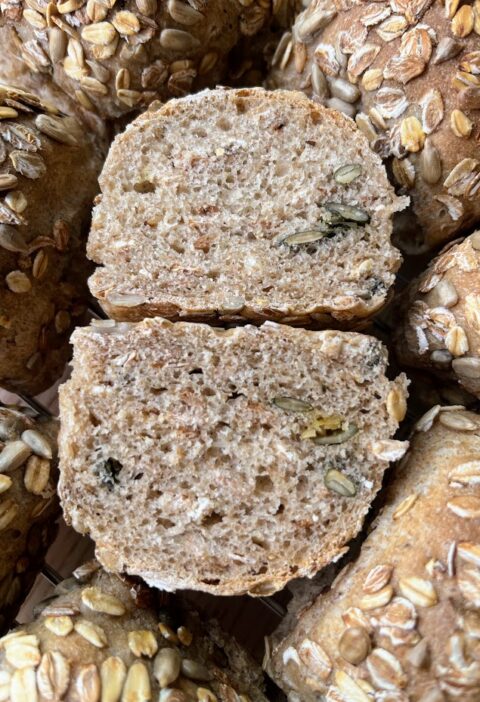
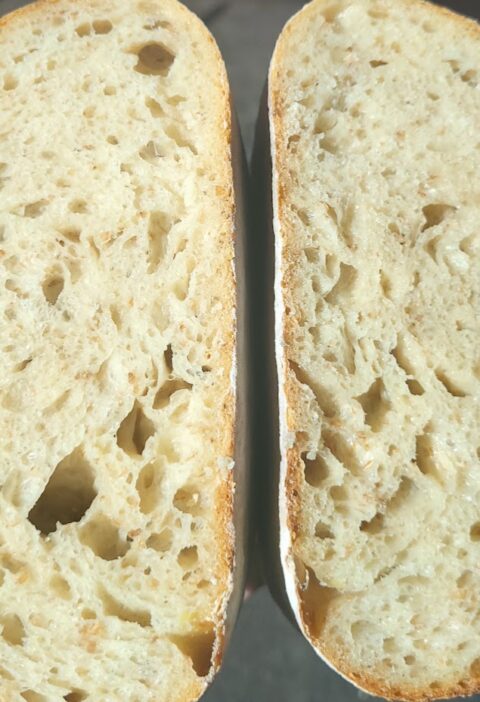
One of the most defining features of griddle-baked dough is a highly porous, crater-filled interior. How does this happen without traditional oven spring?
As the intense, direct heat from the griddle penetrates the bottom of the thick dough, the trapped gases from the omládek (preferment) rapidly expand. Because the top of the dough is still cool and pliable, these expanding gas bubbles shoot straight upward, forming vertical tunnels through the crumb. When the dough is flipped, the structure sets, locking those beautiful vertical pockets in place.
Temperature Control: The Key to Success
The most common mistake in griddle baking is using high heat. If the pan is too hot, the direct conduction will burn the exterior before the center has time to cook and set. The golden rule is a steady, moderate temperature. A slow bake ensures a deeply toasted crust and a fully cooked, fluffy interior.
Ready to put this science into practice? Try it out with the ultimate homemade English Muffins recipe!
Enjoyed this baking deep-dive? Join our Bakeklubb for monthly artisan baking notes and early access to upcoming workshops.